
How Much Does a Food Truck POS System Cost in 2026?
A food truck POS system can start with $0 monthly software, but the real cost includes payment processing, hardware, setup, and support. Learn how to calculate the total cost before choosing a provider.
Quick answer
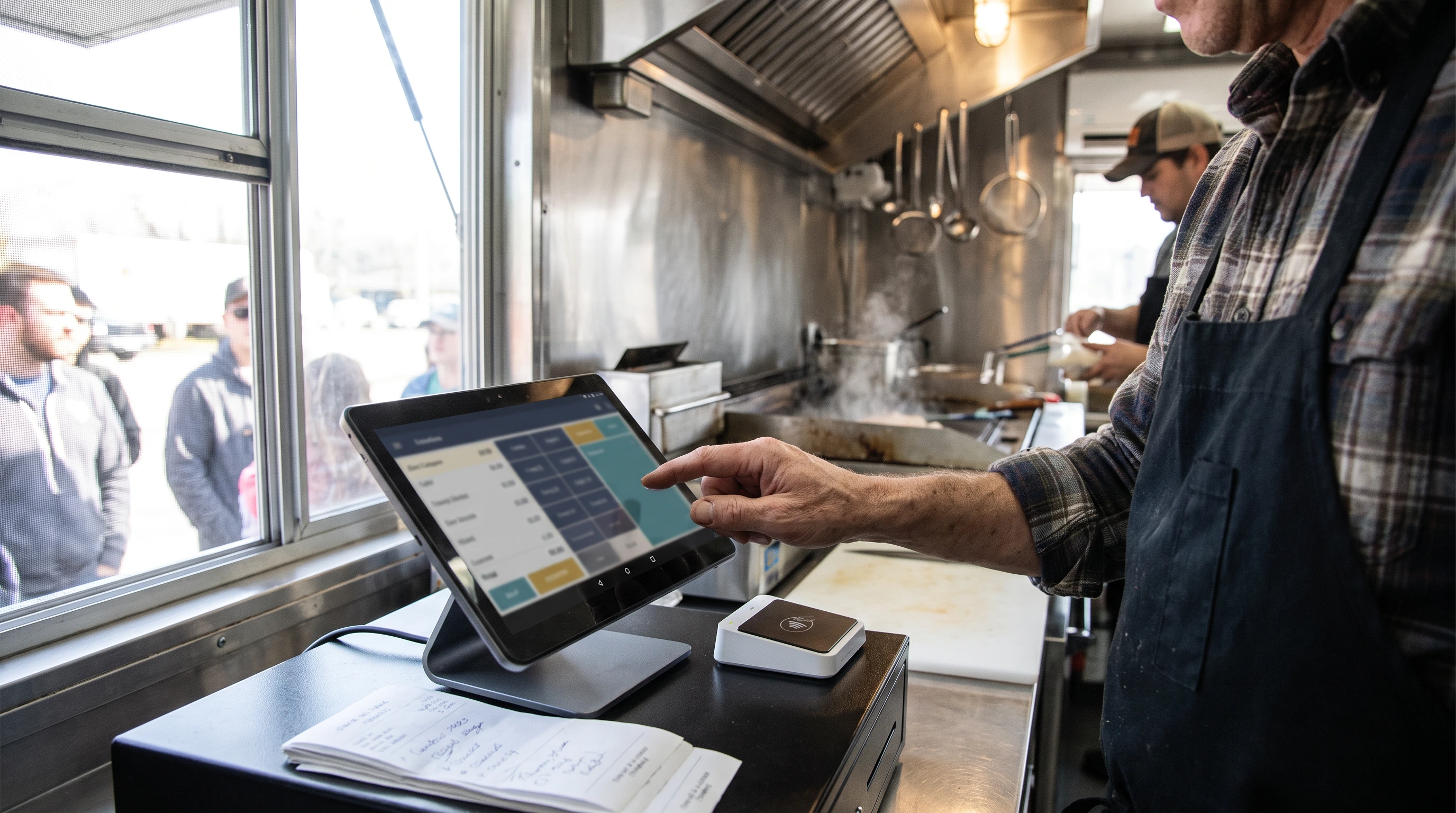
A food truck POS system does not have one single price. Your actual cost is the total of the software subscription, payment processing, hardware, setup, and ongoing support.
Some food truck POS systems have no monthly software fee, but card payments still carry a percentage fee and a fixed charge for each transaction. As card volume grows, those processing fees can become more important than the advertised monthly subscription.
The best way to compare POS systems is to calculate the total cost using your expected card sales, number of transactions, and average ticket.
What determines the cost of a food truck POS system?
There are four primary costs to consider.
1. POS software
The software is the application your team uses to enter orders, calculate totals, accept payments, and review sales.
A basic food truck POS may include:
- Walk-up order entry
- Cash and card payments
- Menu categories and modifiers
- Order tickets
- Basic sales reporting
Paid plans may include online ordering, advanced reports, loyalty programs, customer notifications, kiosk mode, kitchen displays, website management, or dedicated support.
Do not pay for features simply because they appear on a list. Focus on tools that will save time, improve service, or help generate additional orders.
2. Payment processing
Payment processing is usually the largest continuing POS expense for a card-heavy food truck.
Most providers charge:
- A percentage of each card sale
- A fixed fee for every card transaction
You should also ask whether online payments, manually entered cards, refunds, or chargebacks carry different fees.
The fixed transaction fee is particularly important for food trucks because they often process many relatively small tickets.
3. Hardware
A practical food truck POS setup may include:
- A tablet or register
- A compatible card reader
- A stand or protective case
- A receipt or kitchen printer
- A kitchen display screen
- Charging equipment or backup power
Some POS providers require proprietary hardware. Others allow you to use a compatible tablet you already own.
A bring-your-own-tablet system can reduce startup costs and make replacing damaged equipment easier.
4. Setup and support
Some providers give you access to the software and expect you to configure it yourself. Others offer onboarding or managed service.
Setup may include:
- Creating menu categories
- Entering items and prices
- Building modifiers
- Configuring taxes
- Connecting payment hardware
- Adding service locations
- Preparing online ordering
- Training staff
Doing this yourself can reduce upfront costs. Paying for setup may make sense when your time is better spent preparing the truck, booking events, or serving customers.
How to calculate food truck payment processing fees
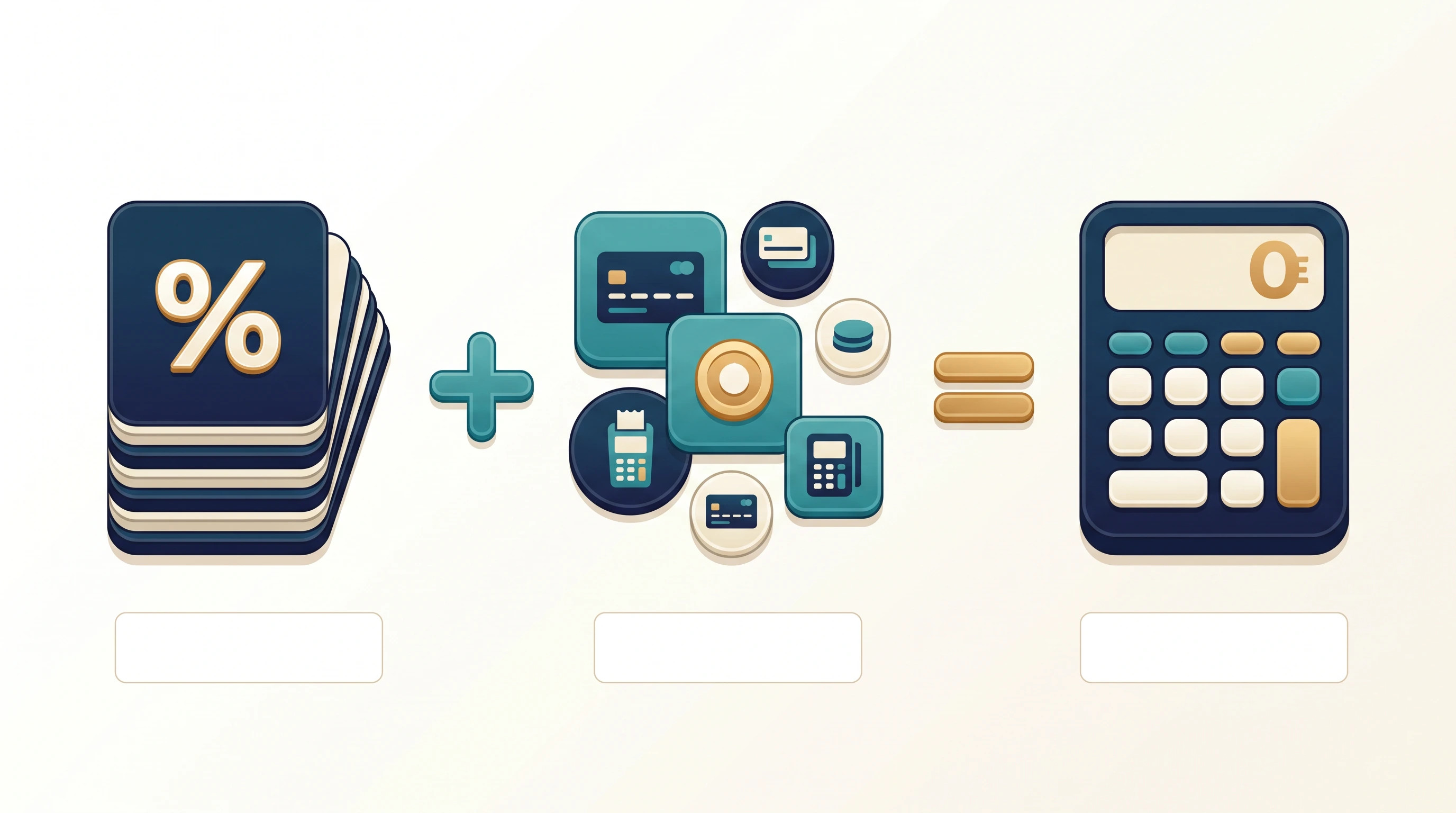
Use this formula:
Monthly processing cost = monthly card sales × percentage rate + number of card transactions × fixed transaction fee
Suppose a food truck processes $9,600 in card sales across 800 transactions. Its average card ticket is $12.
At a processing rate of 2.90% plus $0.20:
- Percentage charge: $9,600 × 2.90% = $278.40
- Fixed charges: 800 × $0.20 = $160
- Total processing cost: $438.40
Even if the POS software costs $0 per month, this truck would still pay approximately $438.40 in processing fees.
This is why you should compare total cost rather than percentage rates alone. A fixed 20-cent fee affects an $8 transaction more than it affects a $40 transaction.
Free versus paid food truck POS systems
A free POS system may be appropriate when:
- You are opening a new food truck
- You already own a compatible tablet
- You primarily need an in-person register
- You are comfortable configuring your own menu
- You do not need online ordering yet
- You want to test the workflow before committing
A paid or managed plan may be appropriate when:
- Your card volume is increasing
- You need online ordering
- Your schedule or location changes frequently
- You want a website connected to the POS
- You need loyalty, kiosk, or customer-notification tools
- You want help maintaining menus and business information
- A lower processing rate offsets the subscription
“Free” does not always mean lowest total cost. Similarly, a paid plan is not automatically better. The right choice depends on transaction volume, required features, and how much work you want to manage yourself.
A real food truck POS pricing example
The following example uses SimonPOS pricing published on August 18, 2026. Review current pricing before making a final decision.
Solo Register
- Monthly software: $0
- Published processing rate: 2.90% + $0.20
- Setup fee: $0
- Best suited for: In-person POS without a monthly software subscription
Managed
- Monthly software: $59
- Published processing rate: 2.80% + $0.15
- Setup fee: $229
- Best suited for: POS, website, online ordering, connected business tools, and managed support
Managed Plus+
- Monthly software: $99
- Published processing rate: 2.70% + $0.10
- Setup fee: $529
- Best suited for: A managed POS ecosystem with a branded customer application
Solo Register provides an in-person POS without a monthly software fee. Managed adds a website, online ordering, connected business tools, and managed support. Managed Plus+ adds a branded customer application.
All three plans require the merchant to provide an Android tablet. Managed plans include a simple M2 card reader. A printer is optional because SimonPOS can also use a built-in kitchen display screen.
Example monthly costs
These calculations combine the monthly software price with the published card-processing rate.
They exclude one-time setup, taxes, chargebacks, optional hardware upgrades, and payment types that may carry different rates.
$5,000 in monthly card sales
Based on 400 transactions with an average ticket of $12.50:
- Solo Register: $225 per month
- Managed: $259 per month
- Managed Plus+: $274 per month
$15,000 in monthly card sales
Based on 1,000 transactions with an average ticket of $15:
- Solo Register: $635 per month
- Managed: $629 per month
- Managed Plus+: $604 per month
$30,000 in monthly card sales
Based on 2,000 transactions with an average ticket of $15:
- Solo Register: $1,270 per month
- Managed: $1,199 per month
- Managed Plus+: $1,109 per month
At lower volume, the plan without a monthly software fee has the lowest direct cost in this example.
As sales and transaction counts increase, lower percentage and fixed transaction fees begin to offset the monthly subscription. At higher volume, the plan with the larger subscription can produce a lower total monthly cost.
Cost is only part of the comparison. Managed plans also include services and customer-facing tools that are not part of the free register.
POS fees that are easy to overlook
Before selecting a provider, ask about:
- Setup and activation fees
- Hardware purchases or leases
- Additional register fees
- Online-ordering fees
- Per-order commissions
- Premium support
- PCI or compliance charges
- Monthly statement fees
- Chargeback fees
- Early termination fees
- Higher rates for online or manually entered cards
- Paid integrations
- Menu migration charges
Ask the provider to explain every recurring and one-time charge in writing.
Ten questions to ask before choosing a POS
- What is the monthly software price?
- What percentage is charged on card sales?
- What is the fixed fee per transaction?
- Are online and manually entered payments charged differently?
- Can I use my own tablet?
- Is a card reader included?
- Are online ordering and KDS tools included?
- Who enters and maintains my menu?
- Is support included?
- What will the system cost at my expected monthly sales volume?
A provider should be able to answer these questions clearly. If the pricing requires a complicated explanation, ask for a written example using your own sales estimates.
Frequently asked questions
How much does a food truck POS system cost?
The total depends on software, payment processing, hardware, setup, and support. Some systems begin with $0 monthly software, while others charge a subscription or require an upfront hardware package. Card-processing fees usually continue regardless of the software price.
Can a food truck use a free POS system?
Yes. A free POS system may work well for a new truck that only needs an in-person register. Confirm which features are included and calculate the card-processing cost before deciding that the free plan is the least expensive overall.
Does a food truck POS include payment processing?
Many platforms connect POS software and payment processing, but processing charges are normally separate from the software price. Ask for both the percentage rate and fixed transaction fee.
Can I use my own tablet as a food truck register?
Some tablet POS systems allow you to provide your own compatible device. Others require proprietary hardware. Confirm the supported operating system and minimum specifications before purchasing equipment.
When should a food truck upgrade from a free POS plan?
Consider upgrading when lower processing rates, online ordering, managed support, advanced reporting, or customer-facing features provide more value than the additional monthly cost.
Final takeaway
Do not choose a food truck POS system based only on the advertised monthly price.
Calculate the complete cost:
Software + payment processing + hardware + setup + support
For a new truck, a simple free register may be the smartest starting point. For a growing or card-heavy operation, a paid plan with lower processing fees and additional tools may provide better overall value.
The right POS should help your team take orders, keep service moving, understand sales, and spend less time maintaining technology.